Beyond School
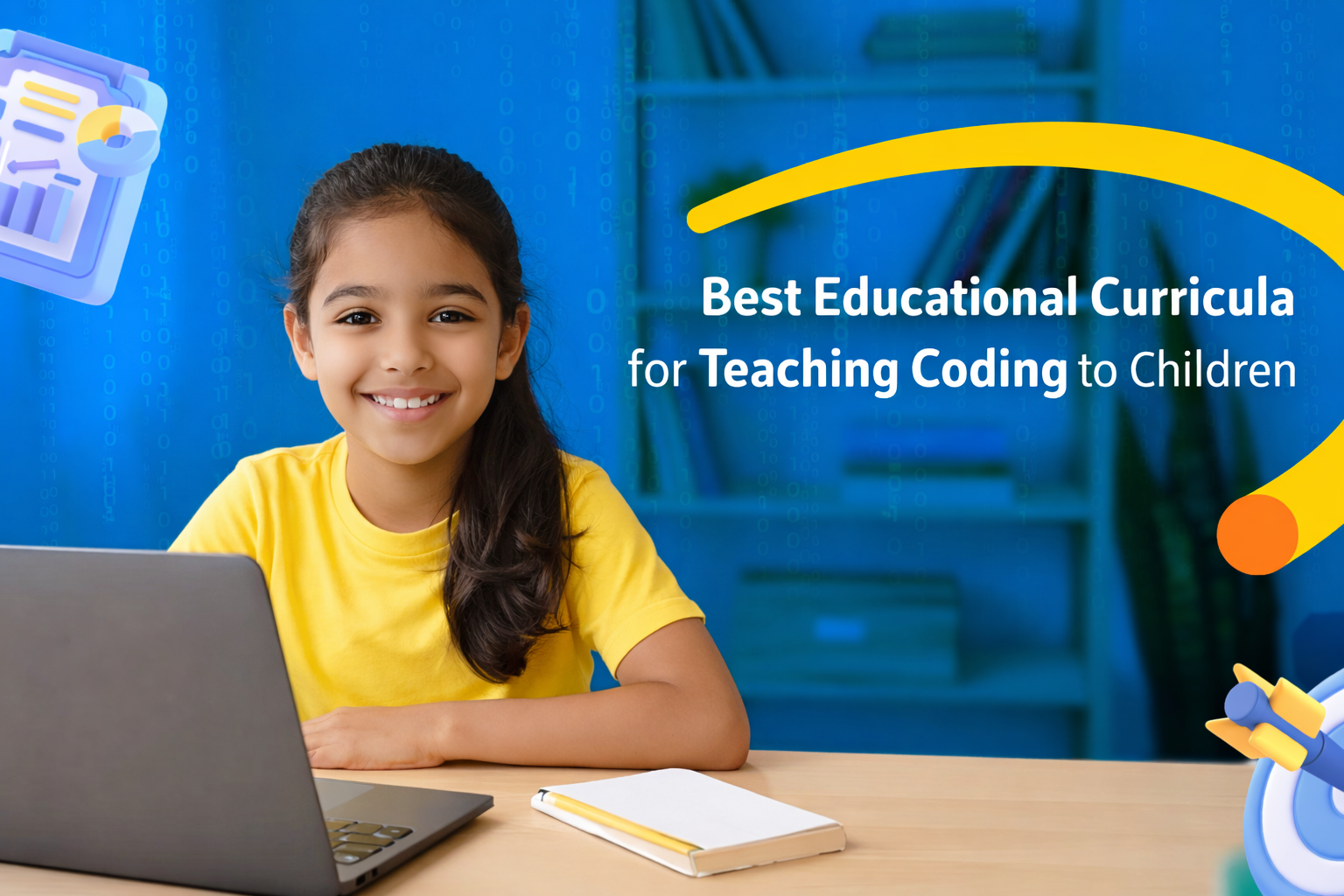
Best Educational Curricula for Coding to Kids of All Ages
December 7, 2025
Children today don’t just use technology, they live within it. With this rapid change, coding is no longer just an extra skill; it has become a new language that helps children understand the world around them and actively shape it.
Learning coding at a young age isn’t only about preparing a child for future careers. It teaches logical thinking, experimentation, and creativity. Every small project a child builds, from a game to a simple app, is a step toward developing cognitive skills and self-confidence.
At iSchool, we see how children’s passion for technology turns into real skills through interactive curricula designed for every age from 6 to 17, combining learning and fun in a practical way.
In this article, we’ll explore why it’s important for children to start learning coding early, and which curricula are best suited for each age group to help build a promising digital future.
Why Should Children Learn Coding at an Early Age?
The goal of teaching coding early isn’t to turn a child into a “professional programmer” right away, but to help them develop a different way of thinking.
A study by the Harvard Graduate School of Education (2022) found that children who learn coding develop their daily problem-solving skills by 35% more than their peers.
Coding teaches children:
At iSchool, we see this clearly. One third-grade student started with a basic coding course, and within a few months, he built an educational game to help his classmates learn addition and subtraction in an interactive way. This kind of hands-on application shows how coding becomes a tool for creativity and confidence-building.
Beginner Curricula: For Children Aged 6 and Above
The ages between 6 and 8 are ideal for introducing computational thinking, but in a way that matches the nature of this age group, through play and experimentation.
A study by the American Academy of Pediatrics (2021) confirmed that children at this stage learn abstract concepts (such as logic and sequencing) faster when they’re presented in a fun and interactive context.
That’s why, at iSchool, the curriculum begins with simple projects that help children understand cause-and-effect relationships and how instructions are executed by a computer.
Children don’t study complex “code” at this stage. Instead, they discover for themselves how logic can move things, whether it’s a game character, an interactive story, or a simple robot. This interactive approach helps children see learning as something enjoyable, not a school obligation.
Advanced Curricula for Older Children: Python, Game Development, and Mobile Apps
As children grow older, they begin transitioning from logical thinking to writing real code.
At iSchool, students learn practical programming languages such as Python, the same language used by major companies, presented in a simplified way that suits each age group.
From age 10 through adolescence, students work on projects such as:
A study by the European Commission on Digital Education (2022) showed that 70% of children who learned coding demonstrated clear improvement in math and science performance.
This is because coding strengthens logical thinking and attention to detail, two essential skills across all academic fields.
At iSchool, we’ve seen 12-year-old students design apps to review school lessons, and 14-year-olds participate in school tech competitions with real projects they started during their courses.
Additional Skills: Web Development, UI/UX Design, and Artificial Intelligence
At advanced levels, iSchool offers comprehensive programs that open new horizons for children in the world of technology.
Children don’t just learn how to code, they learn how to use it to build real digital products.
The curricula include:
A study from Stanford University (2023) showed that children exposed to AI applications at a young age develop analytical thinking skills 25% more than their peers.
That’s why iSchool integrates these concepts into its curricula in ways that connect technology to everyday life.
Enroll Your Child at iSchool and Start the Coding Journey with the Latest Global Curricula
iSchool offers structured programs in Saudi Arabia and Egypt for children aged 6 to 17, designed according to the latest global educational methods and supervised by instructors specialized in teaching coding to kids.
Each level ends with a hands-on project where children apply what they’ve learned, helping them gain real experience and stronger self-confidence. Parents also receive regular progress reports to track their child’s development step by step.
In recent years, iSchool has helped hundreds of children in Saudi Arabia build small digital projects, some of which evolved into innovative app ideas.
These children now think differently, understand technology, and use it to create something new, not just consume it.
Start now and enroll your child at iSchool to give them a real opportunity to learn the language of the future and develop the creative and intellectual skills that will stay with them for life.