Beyond School
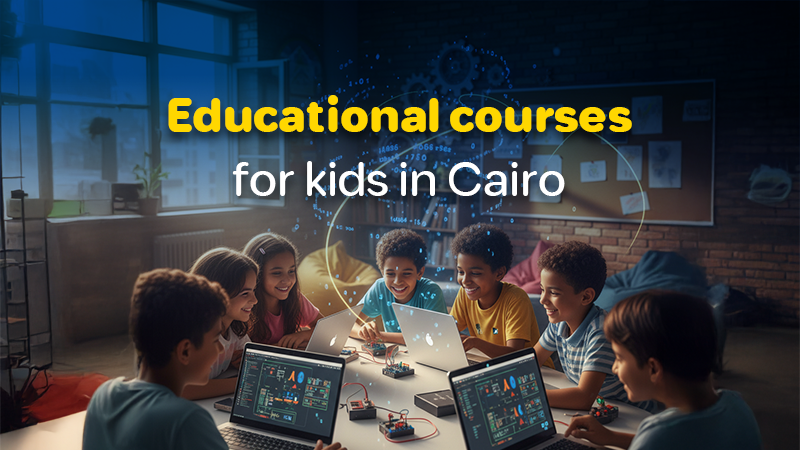
Best Educational Courses for Kids in Cairo Suitable for All Ages
October 26, 2025
In recent years, many parents in Cairo have started asking a new question: “What’s the best educational activity I can invest my child’s time in after school?”
Sports and arts remain important, of course, but there’s one field that’s seeing huge global demand: coding for kids.
According to a 2023 UNICEF report, children who start developing digital skills early are 40% more likely to show stronger critical and creative thinking abilities later on. That’s why coding is no longer just a hobby, it’s becoming a core life skill, just like reading, writing, or math.
In this article, we’ll explore the best coding courses for kids in Cairo, how they can turn learning into fun from as young as age five, and why iSchool stands out as a leading platform in this field.
Why Coding Is One of the Best Learning Experiences for Kids
Coding isn’t just about typing commands, it’s a new way of understanding the world. Research from the Harvard Graduate School of Education (2022) found that kids who regularly learn coding develop stronger problem-solving skills in daily life, even outside technology.
For example:
At iSchool in Cairo, we’ve seen kids turn their imagination into real games and mini-apps, experiencing the same sense of accomplishment they’d feel from winning a sports match or finishing a painting.
Coding Classes for Ages 5–6: Learning Through Play
Parents often ask, “Is age five too early to start coding?” Actually, it’s the perfect age to build thinking skills.
According to a 2021 American Academy of Pediatrics study, children aged 4–7 grasp symbolic concepts best through play. That’s exactly how early coding classes work, they introduce programming through fun, interactive games.
For example:
At iSchool, five- and six-year-olds create their own mini-games on Scratch Jr., what feels like playtime is actually their first step into the world of coding.
Coding Classes for Ages 7–10: Building Strong Foundations
At this stage, children begin to write simple lines of code step by step. A European Commission (2022) study found that 70% of kids who learn coding between ages 7–10 show noticeable improvement in math and science performance.
Why? Because coding trains the brain to think logically.
At iSchool, kids in this group design educational games and basic programs that help them in school. One 9-year-old student in Cairo even created a game to help his classmates review English vocabulary before exams, an experience that boosted his confidence and made coding feel practical and meaningful.
Coding Classes for Ages 11–14: Real Projects, Real Impact
This is where things get truly exciting. At this age, children don’t just want to play, they want to create something real.
A 2023 Oxford Internet Institute study found that teens who work on real-world coding projects develop leadership skills 30% faster than their peers, thanks to teamwork, presentation, and time management.
At iSchool:
This hands-on experience is what makes coding unlike any other activity.
How Coding Develops Thinking and Creativity
Coding doesn’t just produce “mini programmers”, it builds essential life skills:
The World Economic Forum (2022) lists these as among the top five skills for future success.
For example: A child who loves football might design a goal-scoring game. A child who loves stories might turn their story into an interactive adventure. That’s the beauty of coding, it adapts to every child’s passion.
Why Parents in Cairo Choose iSchool
What makes iSchool stand out from other platforms?
In Cairo alone, hundreds of children have joined iSchool programs, turning coding from a “subject” into a creative skill they genuinely enjoy.
Enroll Your Child in iSchool Today
Coding is no longer just an “extra” activity, it’s an investment in your child’s future. Whether your child is 5 or 15, iSchool offers a step-by-step program that builds confidence, creativity, and curiosity with every project.
Start today, enroll your child in iSchool and give them the opportunity to become a creator of technology, not just a user of it.